
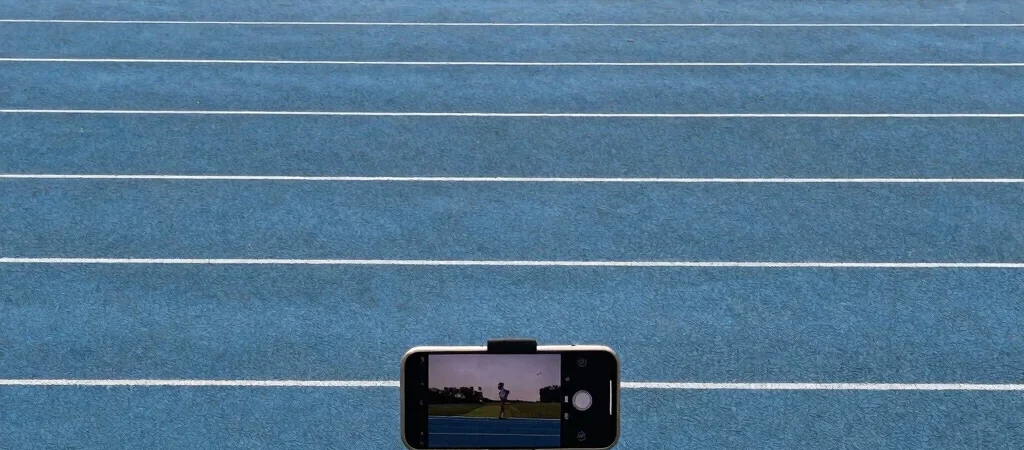
Running form is difficult to assess while you are busy running. A phone set safely beside a track or path can capture a few seconds of movement and let you look later, when you are not also managing pace, traffic, and your breathing.
Keep The Setup Simple
Place the phone on a stable surface or tripod away from the running line, and record from the side in a clear, well-lit stretch. A short clip at a comfortable pace is easier to review than a long video filled with changing angles and distractions.
If you are filming in a public place, be considerate about other people appearing in the frame. Avoid obstructing a path, and do not put a phone where a runner or cyclist could collide with it.
Watch One Detail At A Time
Choose one visible detail to observe, such as whether your posture changes as you tire or whether your arms move comfortably alongside your body. A basic video is better for noticing broad patterns than judging tiny differences frame by frame.
Do not turn a single clip into a verdict about what is wrong with your body. Camera angle, pace, footwear, and fatigue all affect what you see, and video alone cannot diagnose pain or injury.
Make The Observation Actionable
Take one observation into your next easy run rather than trying to change several things at once. If a form change feels uncomfortable, stop experimenting; persistent pain is a reason to seek qualified guidance, not to keep analyzing footage.
The value of sports technology is not always a sophisticated sensor. Sometimes a steady phone, a safe filming spot, and one careful question are enough to make movement easier to understand.